The authors of MSK Radiology 4U continue a proud tradition of musculoskeletal imaging in Birmingham, England going back over 100 years. It all started with Dr James Brailsford (1888–1961) the original radiologist to the Royal Orthopaedic Hospital formerly known as the Royal Cripples Hospital.
He was arguably the doyen of bone radiology in the early and mid-part of the twentieth century publishing the definitive textbook entitled The Radiology of Bones and Joints that went to 5 editions between 1934 and 1953.
Between 1919 and 1961 he published, as the sole author, over 125 articles on subjects varying from 1st World War bullet injuries (1919) to the eponymous Morquio-Brailsford Syndrome (1929).
Many of Brailsford’s original radiographs and lantern slides collected during his illustrious career exist to this day. Some predate the formation of the National Health Service and have been included in this educational tool.
Brailsford was succeeded by another famous MSK radiologist, Dr Philip Jacobs (1917–2005). He was also a prolific author, published an Atlas of Hand Radiographs (1973) and was a founding member of the International Skeletal Society in 1972 and for some years the editor of the journal Skeletal Radiology.
On his appointment in 1984 Dr Mark Davies inherited Drs Brailsford’s and Jacob’s extensive collection of teaching files housed in six large filing cabinets.
Over the years he added numerous further cases to the collection including trauma from his time working at the Birmingham Accident, Birmingham General and Selly Oak Hospitals.
For much of the last century teaching of imaging comprised either small groups gathered in a darkened room clustered around a bank of viewing light boxes.
In 1993 Dr Davies became a regular member of the faculty for the musculoskeletal module of the Erasmus Course on Magnetic Resonance Imaging.
The website and apps you can now access are therefore the culmination of Dr Davies' and his supporting team's efforts over the past 20 years supplemented with fascinating historical material from back to the mid twentieth century.
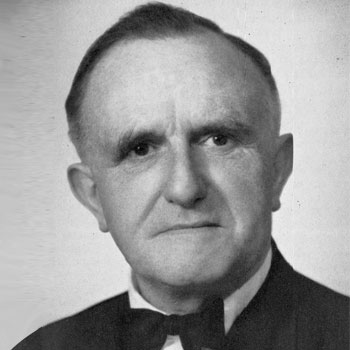
Dr. James Brailsford
PIONEER IN SKELETAL RADIOLOGYFirst Director of Radiology at the Royal Orthopaedic Hospital, Birmingham (1888–1961).
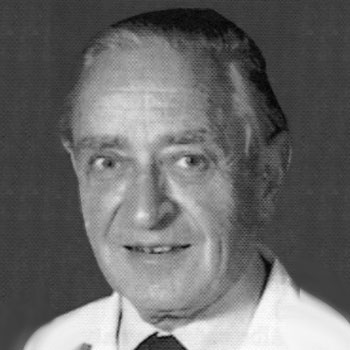
Dr. Philip Jacobs
CLINICAL RADIOLOGISTSuccessor and guardian of the teaching collections during the mid-century expansion.